
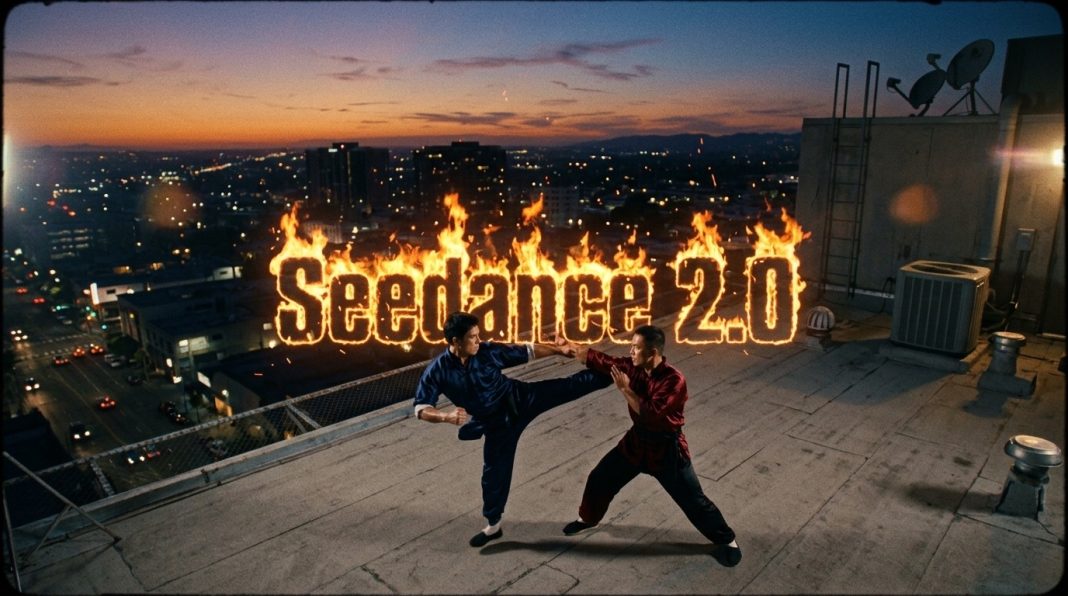
ByteDance has suspended the global rollout of Seedance 2.0, and for anyone who’s spent time with the tool, that’s genuinely bad news. On pure output quality – physics, motion, lifelikeness – Seedance 2.0 is widely regarded as the strongest generative video model currently available. Benchmark comparisons circulating across creator forums and technical communities have consistently placed it ahead of Runway, Sora, and Veo on realism and coherence. It’s the model people were most excited to get their hands on internationally.
They’ll be waiting. ByteDance launched Seedance 2.0 in China on 12 February and had planned a mid-March global release including API access for businesses. That’s now indefinitely on hold. The reason: a wave of copyright pressure that escalated from industry complaints to Congressional intervention in the space of a few weeks.
The short version: viral clips generated on the platform – including a fake Brad Pitt vs Tom Cruise fight and a rewritten Stranger Things ending – triggered cease-and-desist letters from Disney, the Motion Picture Association, and others. On 17 March, US Senators Blackburn and Welch wrote to ByteDance’s CEO demanding the tool be shut down entirely, calling it the most serious copyright infringement from a ByteDance product to date. The senators also introduced the TRAIN Act, a bill that would let copyright holders subpoena AI companies for training data records. ByteDance says it’s strengthening safeguards. The tool remains available in China only.
For practitioners, the frustration is real. The model that was setting the standard for what AI video could actually look like in production is now locked behind a geopolitical and legal wall with no timeline for return. Competitors – Runway, Sora, Veo, Pika, Luma – have the international market to themselves for as long as this drags on. Whether that’s weeks or months depends on how quickly ByteDance can resolve licensing questions that the rest of the industry hasn’t fully answered either.
The uncomfortable truth is that Seedance 2.0’s quality is part of the problem. A mediocre model generating rough approximations of Tom Cruise doesn’t alarm a studio’s legal department. A model producing footage convincing enough that viewers share it as entertainment does. The better these tools get, the harder the IP questions become. ByteDance got there first. It won’t be the last.