
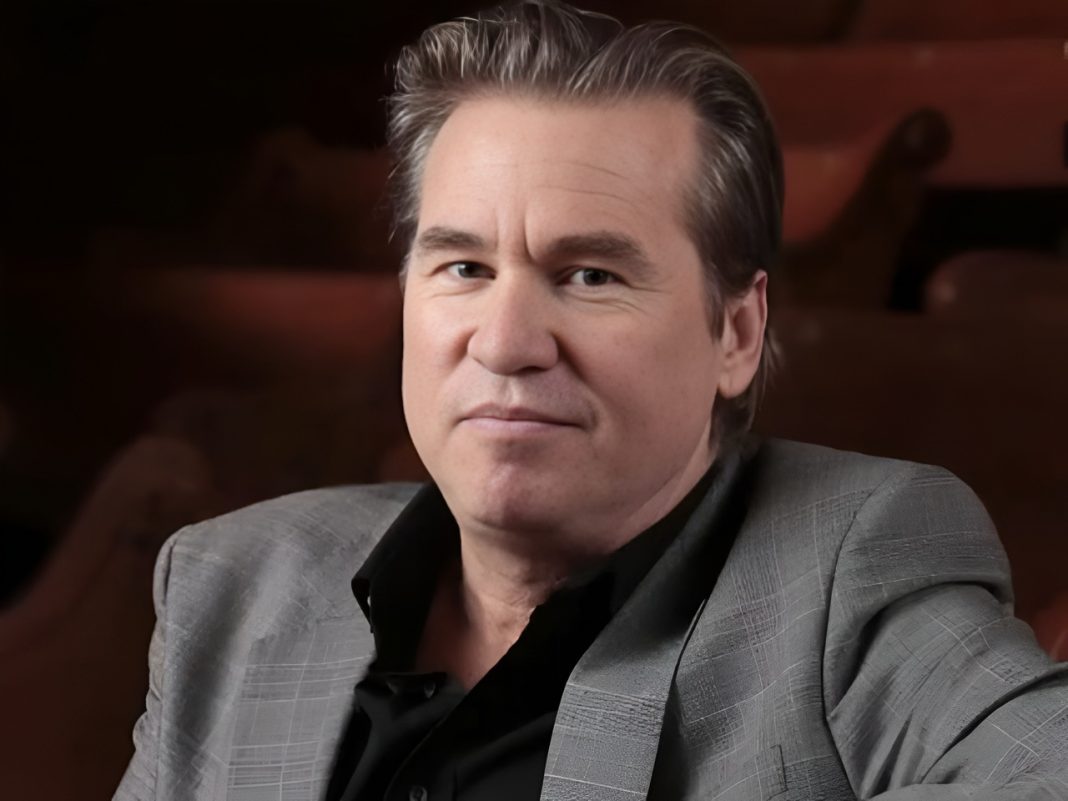
An AI-generated version of the late actor is set to appear in the independent drama As Deep as the Grave, making it the most prominent posthumous AI performance in a feature film to date. For anyone working in AI video production, this is the moment the theoretical became commercial.
Kilmer was cast five years before his death as Father Fintan, a Catholic priest and Native American spiritualist, in a historical drama about early twentieth-century archaeologists in Arizona’s Canyon de Chelly. Written and directed by Coerte Voorhees and produced by his brother John through their New Mexico-based company First Line Films, the film tells the true story of Ann and Earl Morris and their excavation of Ancestral Puebloan sites. The cast includes Tom Felton, Abigail Lawrie, Wes Studi and Abigail Breslin.
Kilmer never filmed a single scene. His battle with throat cancer, which had already cost him his natural speaking voice following two tracheotomies, left him too unwell to reach set. He died of pneumonia in April 2025 at the age of 65. But Voorhees didn’t recast the role. Instead, the production turned to generative AI to build a photorealistic digital version of the actor, drawing on archival images, video and audio provided in part by Kilmer’s family. The AI recreation depicts Father Fintan at multiple stages of life, using both younger footage and material from Kilmer’s later years.
One detail is worth noting for anyone thinking about how this technology actually works in practice. The film uses Kilmer’s post-tracheostomy voice rather than a fully synthesised recreation of his younger sound. The character suffers from tuberculosis, which gave the production a narrative reason to use the damaged voice authentically rather than fabricating something polished. That’s a creative decision that also happens to sidestep one of the hardest technical problems in voice synthesis: convincingly recreating a voice that no longer exists in its original form.
Kilmer’s estate and his daughter Mercedes gave full approval. His son Jack is also reportedly supportive. Mercedes Kilmer said in a statement that her father viewed emerging technologies with optimism as tools to expand what storytelling could do. Kilmer had form here. For Top Gun: Maverick in 2022, he worked with the AI voice platform Sonantic to recreate his voice digitally for his return as Iceman, a collaboration he described at the time as a deeply meaningful experience.
The production says it followed SAG-AFTRA guidelines on digital replicas and that the estate was compensated. That matters, because California’s AB 1836, signed into law by Governor Newsom in September 2024 and effective from January 2025, now specifically prohibits the use of a deceased performer’s digital likeness in audiovisual works without estate consent. Violations carry a minimum liability of $10,000 or actual damages, whichever is greater. The law also sits alongside AB 2602, which governs digital replica provisions in contracts for living performers. Together, they represent the most detailed legal framework in the US for regulating AI performances, though enforcement and interpretation remain untested.
Public reaction has been sharply divided. Supporters point to the family’s involvement and Kilmer’s own enthusiasm for the technology. Critics have called the project everything from ill-advised to something that should be outlawed entirely. What’s less contested is what this means as precedent. Previous posthumous screen appearances, from Oliver Reed in Gladiator to Carrie Fisher in Star Wars, relied on CGI compositing and body doubles. Ian Holm’s appearance in the 2024 film Alien: Romulus moved closer to AI-driven recreation. As Deep as the Grave goes further: an entire performance built from generative AI, in a significant role, with no live footage of the actor in the finished film.
For the AI video industry, the practical implications run in several directions. Estates now hold a licensable asset, a performer’s likeness and voice archive, that can generate revenue decades after death. Productions that secure proper consent and follow the emerging legal frameworks can access talent that would otherwise be permanently unavailable. And for anyone building tools in this space, the demand signal is clear: productions want photorealistic digital humans that can act, not just appear.
The film is expected to seek distribution later this year. Whether audiences accept it on its own terms, or whether the technology overwhelms the story, will tell us something important about where the line sits between innovation and spectacle.
AI Video Week explored the broader questions around AI actors and digital immortality in a recent opinion piece: Should We Bring Back the Dead? And Who Gets Paid?