OpenAI has released gpt-image-2, a new image generation model, three days before it shuts down Sora, its consumer AI video app. The timing is not a coincidence.
The model, branded ChatGPT Images 2.0 on the consumer side, went live for ChatGPT and Codex users on 22 April, with the API following in early May. Microsoft has already rolled it out through its Foundry platform for enterprise use. On LM Arena’s image benchmarks it has taken the top spot, ahead of Google’s Nano Banana 2.
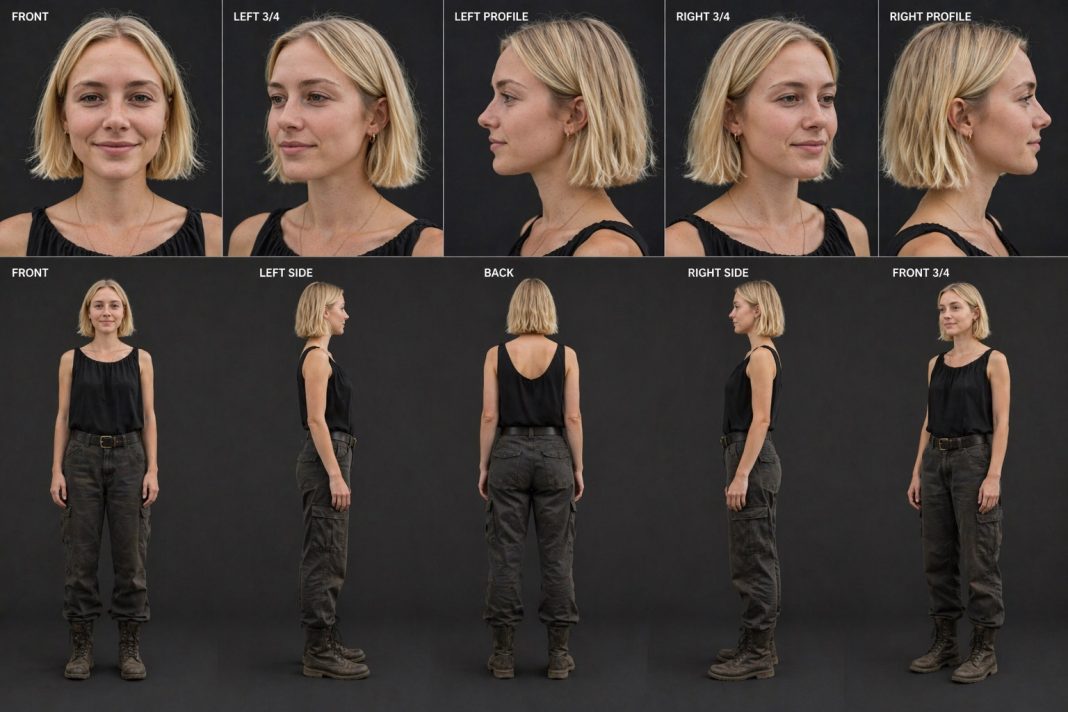
For anyone working in AI video, the interesting feature is not the upgraded text rendering, though that is genuinely useful for on-screen graphics and title cards. It is the multi-image batch generation in the Thinking mode variant. The model can produce up to eight panels from a single prompt while holding character identity, object placement and colour palette consistent across the set. That is, functionally, a storyboard tool.
It is also an image-to-video feed. Runway, Kling and most serious AI video pipelines now accept a sequence of reference images as the starting point for generation. Consistent keyframes have been the hard bit. A model that generates eight on-brand, on-character stills in one pass, with legible text inside them, removes a meaningful step from the workflow of anyone making episodic content, advertising, or vertical drama.
Pricing sits in the enterprise tier. Microsoft Foundry lists token-based pricing of $8 per million input tokens and $30 per million output tokens for gpt-image-2, with a cheaper mini variant at roughly a quarter of the output cost. Per-image cost lands somewhere between four and thirty-five cents depending on resolution and prompt complexity. The model supports output up to 4K on Foundry and adds stronger multilingual text rendering, which matters for anyone producing localised versions of the same asset.
The wider picture is harder to ignore. OpenAI announced the Sora shutdown on 24 March. The app closes on 26 April, the API on 24 September. A reported $1 billion Disney licensing deal collapsed with it. Bill Peebles, who led Sora, left OpenAI on 17 April. Four days later the company launched an image model with storyboard features. Internally the company has been shedding what it calls “side quests” to focus on enterprise revenue, and video generation, as it turns out, was one of them.
That leaves Google, Kling, Runway and a shrinking field of specialists as the serious options for AI video generation itself. OpenAI’s new position is one step upstream, at the pre-production layer, where the margins are better and the compute is cheaper.
For AI video producers, the practical takeaway is straightforward. If you are already building image-to-video workflows, gpt-image-2 is worth testing as a front end. It solves the two hardest problems in reference image generation, character consistency across a set and legible on-screen text, and it is priced as production tooling rather than consumer experiment. Whether it will hold that lead against Nano Banana and the next wave of open models is a separate question.